
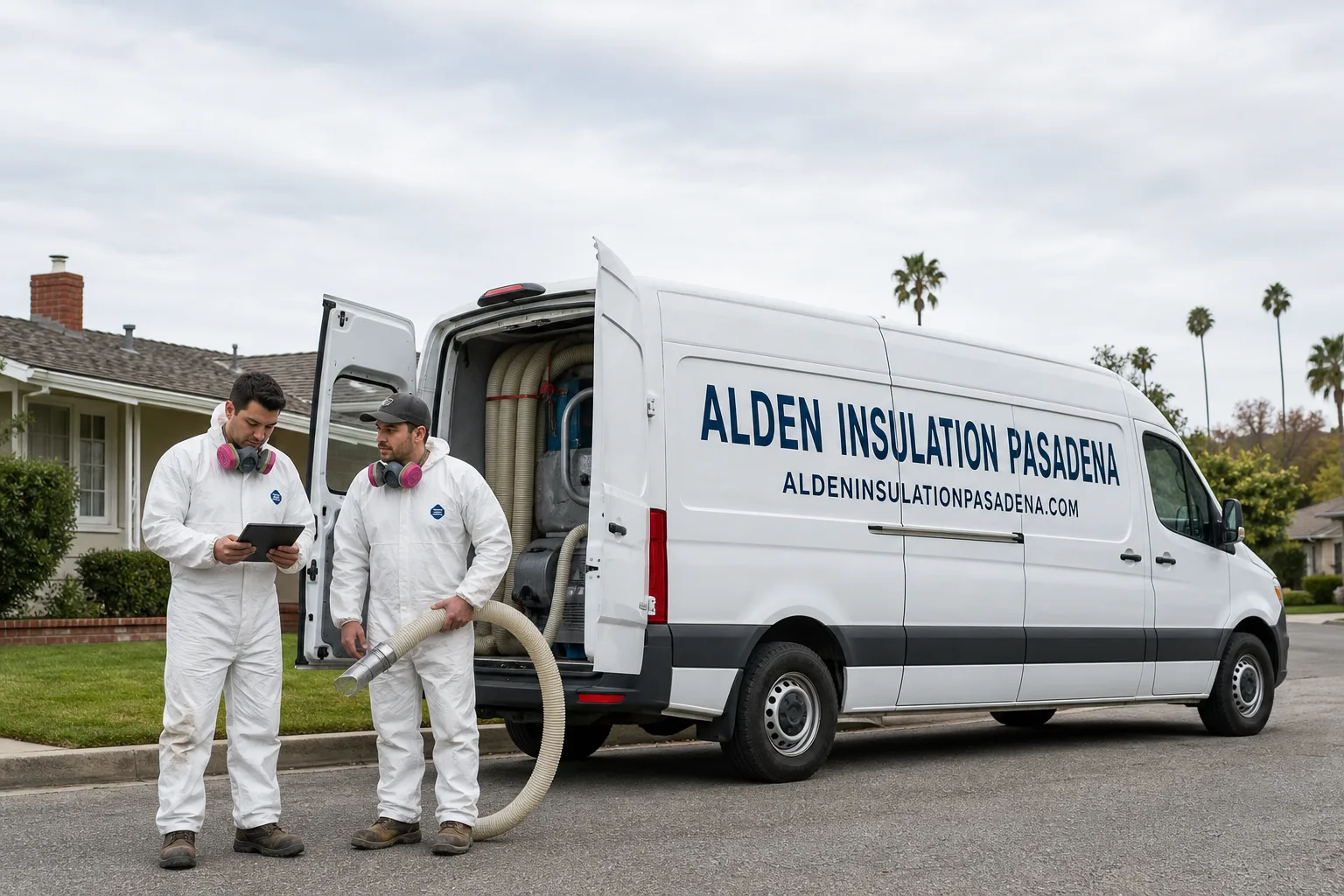
How Much Does Home Energy Audit Cost in Pasadena?
Home energy audits in Pasadena typically cost between $250 and $650 for a standard single-family home in 2026, with most homeowners paying around $400 for a comprehensive audit that includes a blower door test and infrared scanning. Utility-assisted audits through Pasadena Water and Power sometimes drop that to $99 to $199 depending on current rebate availability. A more limited walkthrough assessment without diagnostic equipment can run $150 to $250.
At Alden Insulation Pasadena, we don’t charge for the audit when you proceed with recommended insulation work, and we’ll give you the written price for an audit before we schedule it. The number you approve is the number on the invoice, no exceptions.
Home Energy Audit Cost Breakdown (2026)
Pasadena’s housing stock skews older. A lot of the homes we walk into were built between 1920 and 1970, and the insulation situation varies wildly from house to house. That’s why audit pricing isn’t a flat number. Here’s what you’re actually paying for in the Pasadena market this year:
| Audit Component | Typical Price Range | What You Get |
|---|---|---|
| Walkthrough assessment (light audit) | $150 – $250 | Visual inspection of attic, walls, HVAC, windows, and doors. No diagnostic equipment. Basic report. |
| Blower door test (standalone) | $150 – $300 | Measures air leakage in CFM. Identifies where air is entering and escaping. |
| Infrared / thermal imaging scan | $100 – $250 | Identifies missing insulation, thermal bridging, and air leaks behind walls. |
| Full comprehensive audit (blower door + infrared + written report) | $350 – $650 | Complete diagnostic picture with prioritized recommendations and projected savings. |
| Utility-subsidized audit (via PWP or SoCalGas) | $99 – $199 | Same as comprehensive, but subsidized. Availability changes by season and funding. |
| Insulation-only inspection (attic focus) | $100 – $150 | R-value measurement, coverage check, vent inspection. Often credited toward insulation work. |
What drives the cost up? Three things mostly. First, square footage. A 3,000-square-foot Spanish Colonial in Madison Heights takes longer to diagnose than a 1,100-square-foot bungalow in Bungalow Heaven. Second, construction era. Homes built before California’s 1978 Title 24 energy standards often have no wall insulation at all, which means more diagnostic time and a more involved report. Third, whether the auditor is licensed and credentialed. A BPI-certified or HERS-certified auditor charges more than a contractor doing a walkthrough, and the report quality differs accordingly.
One thing we tell every homeowner in Pasadena: if an audit quote comes in under $100 for a full diagnostic, someone’s cutting corners. You either won’t get a blower door test, or you’ll get a sales presentation disguised as an audit.
What Affects Home Energy Audit Pricing in Pasadena
- Home size and layout. A single-story ranch in Hastings Ranch audits faster than a multi-level home with additions. More rooms and more zones mean more diagnostic time.
- Construction era and framing type. Pre-1978 homes in neighborhoods like Normandie Heights and Garfield Heights often have empty wall cavities and minimal attic insulation. Auditors spend more time documenting what’s missing than what’s present.
- Access to attic and crawlspace. Tight attic access, low-slope roofs, or a vented crawlspace in the Arroyo Seco area can add time. Some older Pasadena homes have attics you can barely kneel in.
- Equipment used. Blower door and infrared cameras cost real money to own and operate. A visual-only walkthrough is cheaper because it measures less.
- Report depth. A one-page checklist costs less than a room-by-room report with R-value readings, CFM measurements, and prioritized fixes with dollar figures attached.
- Rebate and program availability. Pasadena Water and Power runs energy efficiency programs that shift pricing year to year. When rebate funds are available, subsidized audits drop in price quickly.
What a Home Energy Audit Actually Covers
An audit is not the same as a home inspection. A home inspector is looking for defects that affect a sale. An energy auditor is looking for where your conditioned air leaks out and your money goes with it. In Pasadena, where summer temperatures routinely pass 95 degrees and older homes were built for a climate that used to be milder, that distinction matters.
A proper audit includes some or all of the following:
- Blower door testing. A calibrated fan is mounted in an exterior door frame and depressurizes the house. The auditor measures cubic feet per minute of air leakage. The test pinpoints exactly where outside air is entering, whether it’s a leaky can light in the living room or a gap around a chimney chase in the attic.
- Infrared scanning. A thermal camera shows where insulation is missing, wet, or compressed. In older Pasadena attics, we regularly find insulation that’s settled from R-30 to R-11 over thirty years. The camera makes that visible in minutes.
- Attic insulation measurement. The auditor measures existing R-value, checks for even coverage, and documents whether the insulation is doing anything at all. For homes in Pasadena’s older districts, the answer is often “not enough.”
- Duct inspection. Leaky ducts in a vented attic can lose 20 to 30 percent of conditioned air before it ever reaches a bedroom. The audit identifies where those leaks are.
- HVAC and water heater assessment. Age, efficiency rating, and operating condition get documented. A 25-year-old gas furnace in a Pasadena home is a real finding.
- Combustion safety check. Gas appliances are tested for proper venting and backdrafting. This one’s not optional. A house that’s been air-sealed without checking combustion appliances can pull carbon monoxide into living space.
Most audits we review in the Pasadena market run two to four hours on site, depending on home size and how many diagnostic tools are involved.
How Much Should You Budget for the Audit Plus What It Finds?
Here’s the part nobody prints. The audit is the cheap part. What it finds is where the money goes.
Based on audits we see across Pasadena, here’s what the findings typically cost to fix:
- Attic air sealing plus blown-in insulation to R-38: $2,800 to $5,500 for a standard 1,200 to 2,000-square-foot home, depending on current conditions and access.
- Duct sealing and repair: $800 to $2,400 depending on how many leaks and whether sections need replacement.
- Air sealing alone (top plates, penetrations, can lights): $1,200 to $2,800.
- Attic insulation removal and replacement (if old insulation is compromised): $3,500 to $7,000.
Most Pasadena homeowners we work with spend between $3,000 and $8,000 after an audit to address the findings. The audit itself is a small fraction of that. The point of the audit is to make sure you’re spending that money on the right fixes in the right order, not guessing.
Alden Attic Insulation installs and removes insulation using products from Owens Corning, Johns Manville, Knauf, Rockwool, CertainTeed, Icynene, Demilec, and GreenFiber. When an audit calls for new attic insulation, you’ll know exactly which brand and type we’re quoting before you approve anything.
How to Save on Home Energy Audit in Pasadena
There are a few ways to keep audit costs down without downgrading to a sales pitch. Start with these:
- Check Pasadena Water and Power programs first. PWP has historically offered subsidized or free audits for residential customers during certain program cycles. It’s a phone call and worth ten minutes.
- Ask if the audit fee is credited toward work. Many insulation contractors, including Alden, credit the audit cost toward the job if you proceed with recommended work. That effectively makes the audit free.
- Bundle with other diagnostics. If you’re already getting duct work or HVAC service done, ask the contractor to include an insulation inspection or infrared scan at a reduced rate while they’re on site.
- Don’t pay for tests you don’t need. A light walkthrough audit for $200 is fine if all you want is a second opinion. The comprehensive test matters most before you spend real money on insulation or sealing. Match the audit depth to your decision.
- Get a free estimate for the work, not just the audit. Alden Insulation Pasadena gives free estimates on all attic insulation and removal work. Call (626) 628-2368 and you’ll talk to a live person who can walk you through what a written quote covers.
What Makes an Energy Audit Worth Paying For
Not every “audit” earns that name. A real audit gives you numbers you can verify: CFM of air leakage, R-value readings, duct leakage percentages, thermal images. A sales visit gives you a brochure and a quote for whatever the contractor was going to sell you anyway.
At Alden Insulation Pasadena, part of the Garrison Partners family since 2002, we operate on The Garrison Standard. That means a written price before any work starts, a written guarantee on every job, and a background-checked crew that shows up inside the scheduled window. The same standard applies whether we’re doing an insulation inspection or a full attic removal and reinstall.
Our Home Energy Audit in Pasadena service tells you what’s happening in your attic and walls, with measurements you can act on. If the audit leads to insulation work, the audit cost is credited back. That’s the cleanest way to make sure you’re not paying twice.
And if the work isn’t done right, the 365-Day Done Right Promise covers it. Written guarantee, full year, free return visit. That’s not a coupon. It’s how we’ve done business since the beginning.
Seasonal Timing and Pasadena-Specific Factors
Audit pricing doesn’t swing much by season in Pasadena the way it does in colder markets. What changes is urgency. July through September is when attics bake. We routinely measure attic temperatures above 140 degrees in mid-summer, which makes an insulation deficiency impossible to ignore. Fall is when most Pasadena homeowners schedule audits, trying to get findings handled before the next summer cycle. If you want flexibility on scheduling, spring is easier.
One Pasadena-specific factor worth knowing: many homes in the Craftsman districts, like Bungalow Heaven and Garfield Heights, have limited or zero wall insulation. Those homes were built before wall insulation was standard. An audit on a 1920s Craftsman will almost always find the attic as the highest-value target, because you can’t easily insulate walls retroactively without opening them up. We tell homeowners the same thing every week: fix the attic first, then air-seal, then evaluate.
The other local factor is the San Gabriel Valley microclimate. Pasadena gets cooler evenings than the Inland Empire, but daytime heat in August is real. Homes here need insulation that works for both cooling season and the mild winter. That’s why we quote specific R-values for our climate zone, not generic recommendations from a national chart.
FAQs – Home Energy Audit Cost
How much does a home energy audit cost in Pasadena?
A full home energy audit in Pasadena runs $350 to $650 for most single-family homes in 2026. Utility-subsidized audits through Pasadena Water and Power can drop that to $99 to $199, and Alden credits the audit cost toward insulation work if you move forward. Call (626) 628-2368 for a free estimate.
Is a home energy audit worth it?
For most Pasadena homeowners, yes. If the audit finds that your attic has R-11 insulation when your climate zone calls for R-38, fixing that alone can cut cooling costs noticeably. A $400 audit that directs $4,000 of insulation spending to the right place is not an expense. It’s the cheapest part of the project.
How long does a home energy audit take?
A comprehensive audit with blower door testing and infrared scanning takes two to four hours on site, plus report time. A lighter walkthrough assessment is usually done in 60 to 90 minutes. Older Pasadena homes with complex additions take longer.
What’s the difference between a free estimate and a paid audit?
A free estimate tells you what a contractor will charge for a specific scope of work. A paid audit measures how your house is actually performing and tells you which work is worth doing first. Both have a place. If you know your attic needs insulation, a free estimate from Alden comes with a written price and a clear scope. If you don’t know where the energy is going, get the audit.
Does Alden do energy audits in Pasadena?
Yes. Alden Insulation Pasadena provides home energy audit services across Pasadena, including Madison Heights, Bungalow Heaven, Hastings Ranch, and the San Rafael hills. Our audit fee is credited toward any insulation work we do as a result. Call (626) 628-2368 and you’ll reach a live person, day or night.
What R-value should my Pasadena attic have?
In Pasadena’s climate zone, attics should carry R-30 to R-38 of blown-in insulation. Many older homes in the city test at R-11 or below. An audit measures what you actually have, so the number on your report is real, not assumed.
Get a Straight Answer on Your Audit
If you want to know what a home energy audit costs in Pasadena and what it will tell you, call us. We answer the phone, we give written prices before any work starts, and we don’t hold you to a quote that changes at the door.
Alden Insulation Pasadena, part of the Garrison Partners family, provides attic insulation, blown-in insulation, insulation removal, and home energy audits for residential homeowners across Pasadena and surrounding communities. Technicians are background-checked and arrive in uniform inside the scheduled window. Every job includes a written price and a 365-day written guarantee.
Call (626) 628-2368 for a free estimate or to schedule an audit. You’ll talk to a human being who can give you real numbers.
Written by Bryce Holloway, home energy audit specialist and owner at Alden Insulation Pasadena, serving Pasadena homeowners since 2002.
Pricing reflects the Pasadena market as of 2026. Alden Insulation Pasadena offers free estimates – call (626) 628-2368.
What Our Customers Say
"Clear estimate with R-value listed. No hidden extras."
- Hank T."Tidy crew. Vacuumed the hall and covered the hatch."
- Bea J."Blown-in insulation in the attic by a veteran crew. They air sealed the top plates first, installed baffles, and marked the depth with rulers. Bills dropped right away."
- Roy H.