
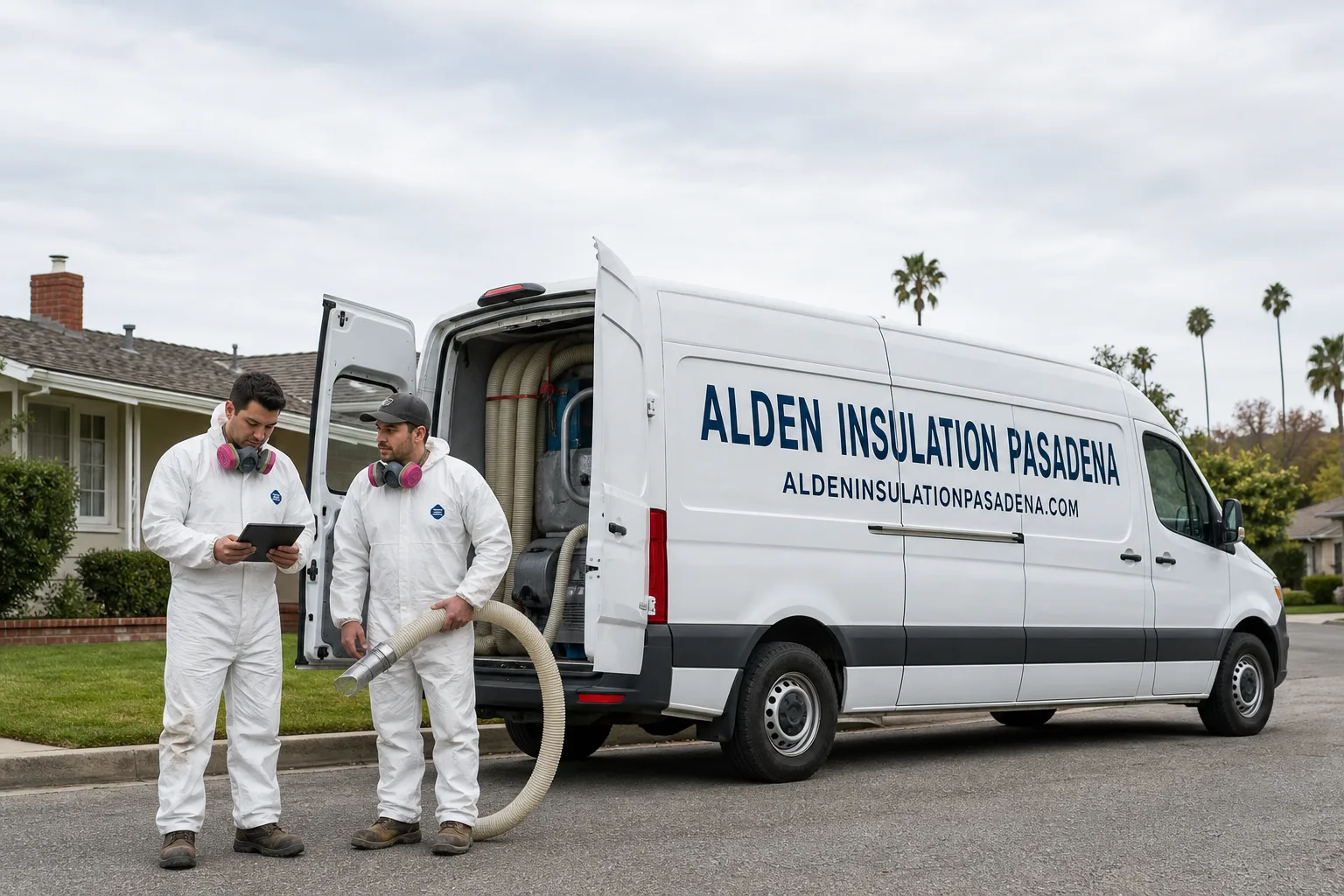
Fast, Reliable Attic Insulation Across Mayflower Village
Most attic insulation projects in Mayflower Village run $1,800 – $4,200 depending on square footage, current R-value, and whether we’re removing old rock wool or topping up what’s already there. Call (626) 628-2368 and we’ll give you a written price before any work starts. We know these houses. We know what’s hiding in their attics. And we show up when we say we’ll show up.
Mayflower Village is home to some of the most intact mid-century housing stock in the San Gabriel Valley. That’s a good thing for architecture buffs. It’s often a problem for insulation. Many of these 1950s and 1960s tract homes went up when energy was cheap and building codes were lax. The attics were an afterthought. Today, that legacy shapes every job we take on here.
Why Alden Insulation Pasadena Is Mayflower Village’s Preferred Attic Insulation Company
Alden Attic Insulation operates as part of the Garrison Partners family, established in 2002, and we hold every job in Mayflower Village to The Garrison Standard: written prices, written guarantees, and a background-checked crew that arrives inside the window we promised. Bryce Holloway leads our team, and he insists on one thing above all else: the number you approve is the number on the invoice. No door revisions. No surprise line items.
We get calls from Mayflower Village homeowners who’ve been burned before. A crew shows up late or not at all. The price changes when the ladder goes up. The job gets done halfway and the phone stops getting answered. We’re not that company. Every attic insulation project here includes a written 365-Day Done Right Promise. If the work fails within a year, we return at no charge. That’s not a pitch. That’s policy.
Response time to Mayflower Village is typically same-day for estimates and within 24 – 48 hours for full insulation work, depending on scope. Our technicians know the local housing stock well enough to anticipate what’s in your attic before they climb up there, which is exactly the kind of local knowledge you want when you’re dealing with 60-year-old insulation.
Attic Cleaning Services in Mayflower Village
Attic Cleaning Services in Mayflower Village are essential for older homes where decades of dust, rodent activity, and degraded insulation have accumulated. We remove old, compacted material, sanitize the space, and prep it for new insulation. Most attic cleaning projects in Mayflower Village run $600 – $1,200 depending on attic size and how much material needs hauling out.
Contaminated Insulation Removal
When rodents or raccoons have been living in an attic, the insulation they nested in has to go. We bag it, remove it, and treat the space before anything new goes in. This is a common situation in Mayflower Village, where mature trees and older rooflines provide easy access for critters.
Pre-Insulation Prep
Before blowing in new cellulose or fiberglass, the attic should be clean. We vacuum out dust, remove debris, and inspect for any wiring issues or leaks. Do it right the first time and the new insulation performs the way it’s rated.
What happens when you call
- 1
A real person answersNo phone trees - you reach a local pro.
- 2
You get an upfront price rangeHonest numbers before anyone is dispatched.
- 3
A background-checked tech heads outLicensed & insured, dispatched right away.
- 4
You approve before work beginsNothing starts until you say go.
Attic Mold Removal in Mayflower Village
Attic Mold Removal in Mayflower Village is a frequent request from owners of 1950s and 1960s ranches where bathroom fans and kitchen vents were often routed into the attic rather than outside. That warm, moist air condenses on rafters and sheathing, and mold follows. Attic mold remediation here typically runs $900 – $2,000 depending on the affected square footage and whether insulation needs replacing.
Ventilation Correction
You can scrub mold off rafters, but if the attic still can’t breathe, it comes back. We check soffit vents, ridge vents, and gable vents, and we correct the airflow problem. In Mayflower Village, many original vents have been painted over or blocked by insulation, which is the absolute best way to invite moisture in.
Insulation Replacement After Mold
Mold spores embed themselves in insulation fibers. That material has to come out. We remove it, treat the framing, and install fresh insulation rated for the attic’s R-value needs. Leaving moldy insulation in place just means you’ll be doing this again in a year.
Trusted Brands We Service in Mayflower Village
We install and remove insulation using products from industry-respected brands, so you can research exactly what’s going into your attic before you approve anything. GreenFiber cellulose is a workhorse for dense-packed walls in Mayflower Village’s 2×4 construction, and Owens Corning fiberglass gives us dependable attic blow-in options. We also work with Johns Manville and Knauf for various applications. Because we’re local to the area, we keep materials stocked and can move quickly on Attic Insulation projects throughout Mayflower Village without the wait times you’d get from a company running material from across the county.
Common Attic Insulation Problems We See in Mayflower Village Homes
- Settled rock wool batts with gaps at the top of wall cavities. The original rock wool in 1950s and 1960s tract homes slumps over time, leaving an uninsulated strip right where the wall meets the attic. That gap acts like a thermal chimney, pulling hot attic air into the house. We see this constantly in Mayflower Village, and most homeowners never suspect it.
- Kraft-paper vapor barriers installed facing the wrong direction. Original fiberglass batts with paper backing were often stapled with the paper facing the attic rather than the living space, trapping moisture against the wood framing. Over decades, that rots eaves and feeds mold. It’s a hidden problem until someone goes up there with a flashlight.
- Air leaks around recessed can lights and chimney chases. Older homes in Mayflower Village were built before air sealing was a consideration. Gaps around can lights and chimney framing let superheated attic air pressurize wall cavities, blowing past whatever insulation is there. Sealing these bypasses matters as much as adding insulation.
- Inadequate attic depth that looks fuller than it performs. Some homeowners see batts laid between joists and assume the attic is insulated. But if the joists are visible above the batts, the R-value is far below what a San Gabriel Valley attic needs. Mayflower Village sees hot, dry summers with big daily temperature swings, so undersized attic insulation hits your cooling bill hard.
Pricing for Attic Insulation in Mayflower Village, CA
We Also Serve Cities Near Mayflower Village
Beyond Mayflower Village, our crews cover Pasadena, Glendale, Alhambra, and Pico Rivera. If you’re in any of those nearby cities and dealing with the same 1960s-era insulation problems, call (626) 628-2368. We schedule work across the San Gabriel Valley and bring the same written pricing and 365-Day Done Right Promise to every job.
Serving Mayflower Village, CA - Our Local Coverage Area
We’re based in the Mayflower Village area and know this community well. Use the map below to see our service coverage - if you’re nearby, we can almost certainly help.
FAQs About Attic Insulation in Mayflower Village
Go up into your attic and look at the material between the joists. If it’s a grayish, granular material that looks almost like damp cardboard, that’s rock wool, and it was likely installed when the house was built. The problem is that rock wool settles over 50 – 60 years, leaving gaps at the top of wall cavities where heat pours in. If you can see wall top plates or daylight at the edges of the attic, that insulation is no longer doing its job. Call (626) 628-2368 and we’ll inspect it for free.
Because the insulation is likely settled, compressed, or full of gaps you can’t see from the attic hatch. In Mayflower Village’s summer heat, with daily temperature swings of 20 – 30 degrees, an attic that’s only R-13 instead of R-38 is the difference between an air conditioner that runs all afternoon and one that cycles normally. The real culprit is often air leakage around can lights, chimney chases, and top plates, not just insulation depth. We find and seal those bypasses on nearly every older home we work on here.
Dense-packed cellulose is the standard answer. GreenFiber blown into 2×4 walls at high density gets you to about R-13 in the cavity, which is the maximum that depth allows, and it fills the entire cavity without the gaps that batts leave behind. For a 1960s ranch, we also recommend air sealing the attic floor and adding a radiant barrier to the rafters if you’re doing the full job. That combination addresses the specific problems those houses have.
If the rock wool is dry, mold-free, and has no rodent contamination, you can blow new insulation directly over it. But if it’s settled to half its original height, it’s often better to remove it, air-seal the attic floor, and start clean. That gives you a known R-value and lets us seal the gaps that are causing the problem in the first place. We’ll give you a straight answer on which route makes sense for your attic, and a written price for either option.
Yes, it’s common, and it’s usually from bathroom fans or kitchen vents that were routed into the attic instead of through the roof. Warm, moist air hits the cool underside of the roof sheathing and condenses. Mold grows on the rafters, and the spores embed in the insulation. The fix is to remove the affected insulation, treat the framing, and correct the ventilation so it doesn’t come back. If you suspect mold, don’t wait. Call (626) 628-2368 and we’ll assess it for free.
Written by Bryce Holloway, Owner at Alden Insulation Pasadena, serving Mayflower Village and the San Gabriel Valley.